

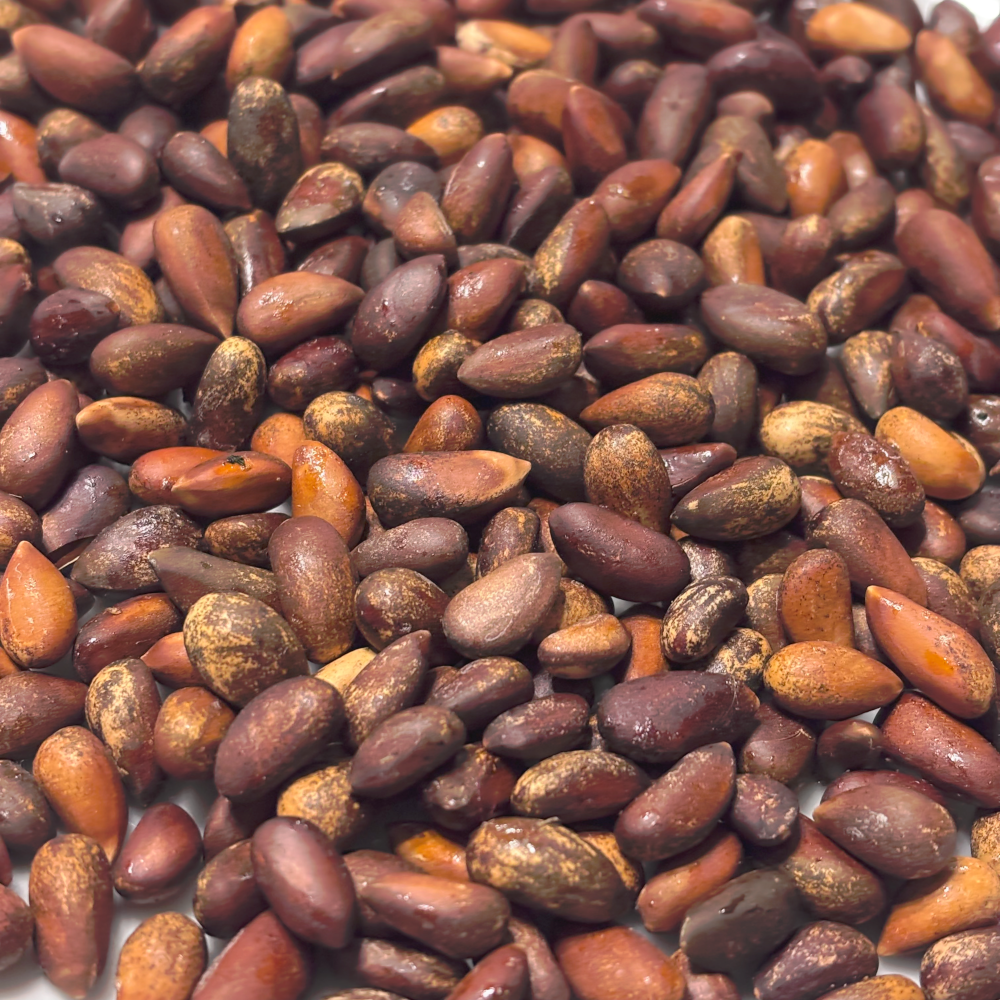
This is a magical time of the year when piñon pine nuts are ready to eat here where I live in Northern Nevada. They can be harvested by collecting the green cones in the fall, preferably September (please be mindful of the ethical, environmental and legal limits) and allowed to ripen in a cool, dry place. Alternatively, some grocery stores sell them though they can be pricey. You can also pick individual ones out of ripe pine cones or ones that fell on the ground but the likelihood of the nut already being eaten inside by insects is much higher at that point. As a kid, a friend of mine would microwave a few piñon pine nuts at a time, making them very creamy and eating them that way. I, on the other hand, would eat the pine nuts of other species found up in the mountains raw.
The species found throughout Nevada is the single-leaf piñon, which has softer shells. The instructions below are based on my experience with them so you may need different bake times for the hard shelled dual-leaf or other species.
How to Roast Piñon Pine Nuts
Preheat oven to 325℉
Wash the nuts. Be careful about pine sap. That can be difficult to remove from, well, anything. Remove any nuts that have holes in them or otherwise appear damaged. You can soak them in salted, hot water for a minute to bring in salty flavor.
Spread out nuts in a single layer on a cookie sheet. Roast in preheated oven for between 10-20 minutes, periodically taste testing to see when they start to have a good flavor. Don’t expect them to be hard. They will solidify more as they cool anyway. Since there’s variation in size and moisture continent, it’s inevitable that some will be overcooked. If a nut seems too overcooked to be flavorful for you, they can be ground up and used as an additive in coffee similar to how one can use roasted chicory root.
Recipes
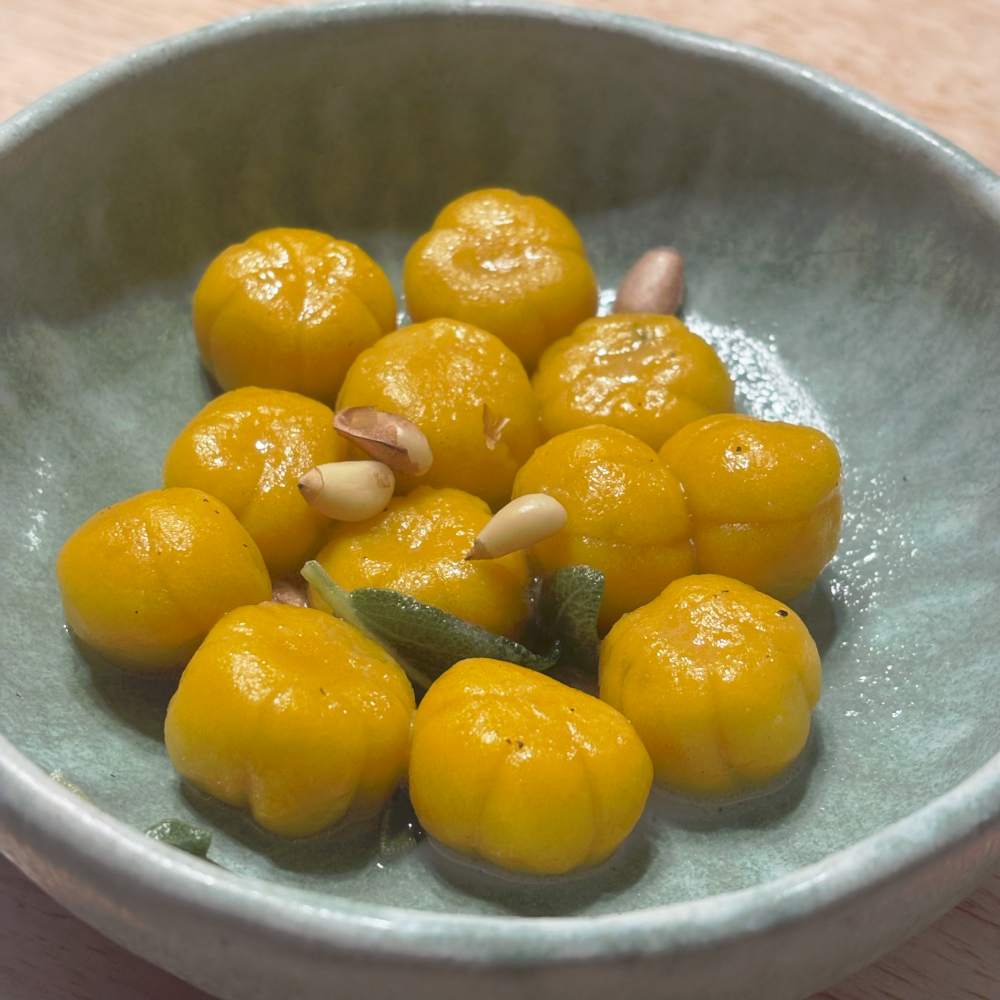
Due to the tediousness of removing shells, I usually simply eat these as-is as a luxurious snack shortly after roasting, maybe as an appetizer for everyone before the main meal. It can also of course be used for anything else you might use pine nuts, but imparting its specific flavors, such as pesto or mole blanco. I also included a photo in this post of recently when I included some shelled nuts as a garnish for kabocha gnocchi (that is, gnocchi made from kabocha, unlike the recipe we shared earlier of potato gnocchi with a kabocha-based sauce).


Leave A Comment
You must be logged in to post a comment.